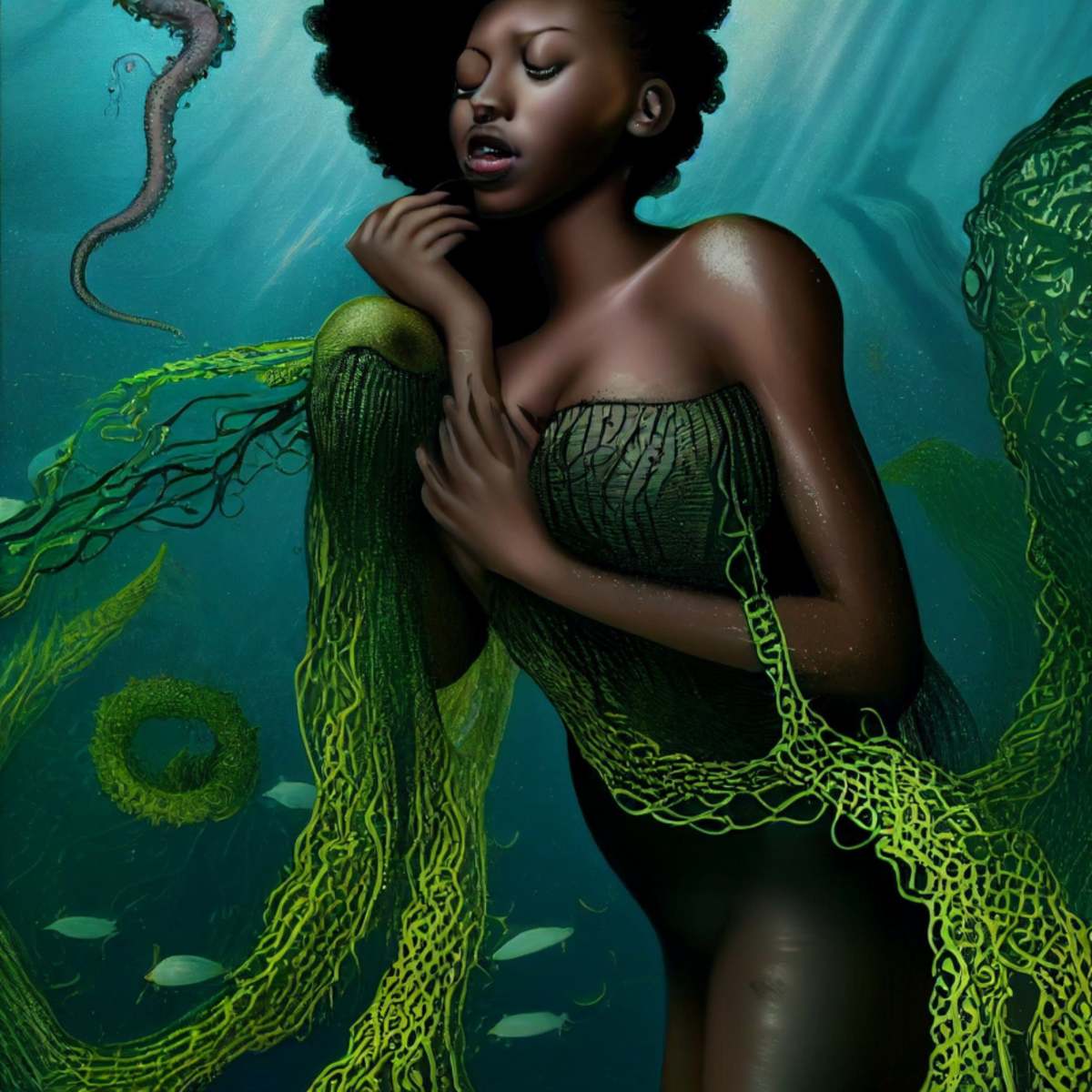
On Emancipation Day, we remember the spirits who refused to drown.
I love mermaids. I always have. Their history, their mythology, the way they shimmer at the edges of our collective imagination. I find it all irresistible. But on this Emancipation Day, I realised something that shifted everything I thought I knew about these creatures of the sea.
Black mermaids didn’t originate in European fairy tales or myths. They crossed over from West Africa to the Caribbean, carried across the Atlantic in the hearts, minds, and memories of enslaved Africans. And in that crossing, they transformed into something even more powerful: ancestors, protectors, and living symbols of survival.
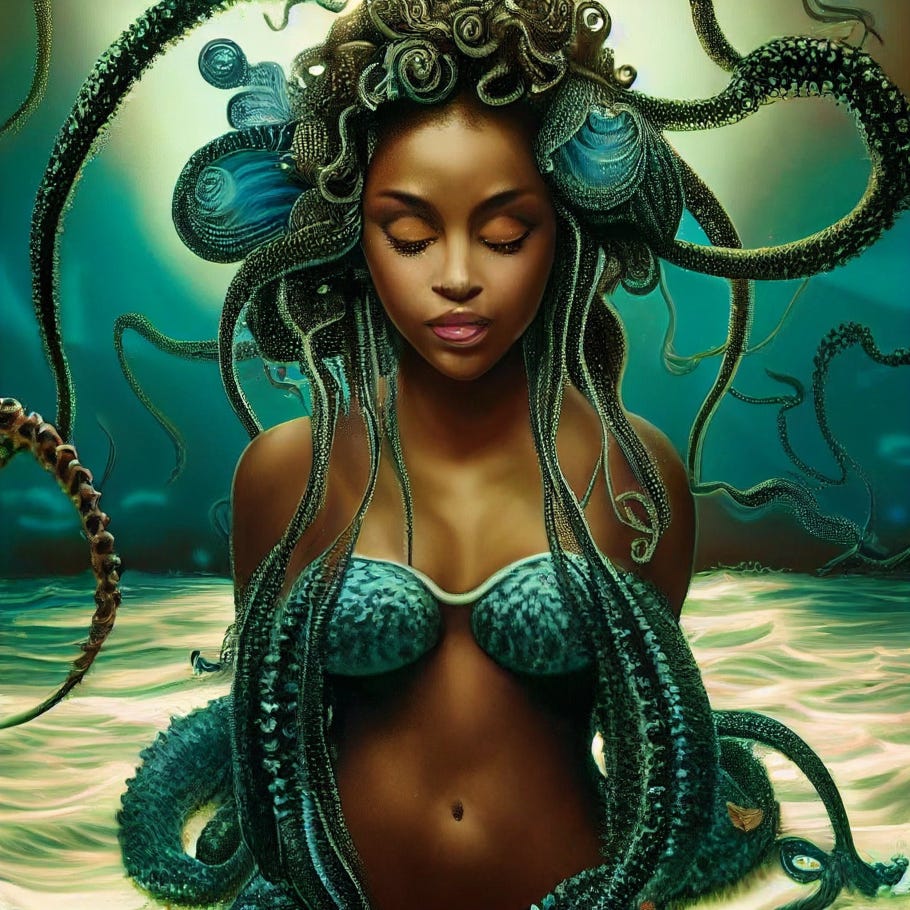
The Goddesses Who Crossed the Water
Before there were Caribbean mermaids, there were West African water spirits. The Yoruba people of present-day Nigeria and Benin venerated Yemanya, also spelt Yemaya or Yemoja, the orisha of the sea, moon, creation, motherhood and protection. She is the protector of women, the guardian of children and the embodiment of motherhood and fertility. In many depictions, she appears as a mermaid, her lower body ending in the tail of a fish, her arms open to receive her children.
When the transatlantic slave trade tore millions from their homelands, Yemanya came with them. She didn’t stay behind in Africa. She crossed the Middle Passage alongside the enslaved, transforming in the process. In the Caribbean, she became something new—still the Ocean Mother, still the protector, but now also a figure of survival and resistance. In Cuba, she is Yemayá in Santería.
And it doesn’t stop there. In Martinique, there is Lamanté, a mermaid figure connected to the island’s Creole traditions. In Haiti, there is Erzulie, the goddess of love, who is sometimes depicted as a mermaid, her domain extending beyond romance to encompass the depths of the sea. Trinidad and Tobago has its own rich tradition of mermaids and mermen, water spirits that inhabit the islands’ rivers, lakes, and coastal waters. Each of these islands, each of these communities, has its own variation, but the thread that connects them all is West African.
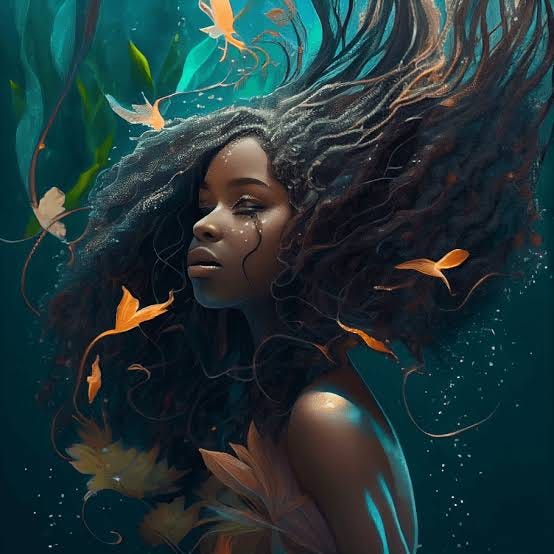
Lasirèn and the Lwas of the Deep
Lasirèn is from the French la sirène, “the mermaid”, and is one of the most complex and powerful figures in Haitian Vodou. She is a loa, a spirit who mediates between the human world and the divine. She represents wealth, beauty, and romance, but also the ever-present possibility of death. She is the goddess of the deep ocean, the keeper of all knowledge, the mother of fish.
In Haitian art, Lasirèn is often depicted with a mirror and a comb, symbols of the gateway to the spirit world and of feminine beauty. She dances with other spirits, surrounded by a court of fish, engaged in celebration and ritual. She is not lonely. She is not waiting to be rescued. She is powerful, communal, and deeply connected to the living.
The Vodou flags created for Lasirèn, made with glass beads and sequins, show her as both Black and light-skinned in different depictions. This reflects the complex syncretism of Vodou itself, an interweaving of African, European, and Caribbean influences that became, in the hands of enslaved people, a system of resistance and survival.
But Lasirèn is not the only one. There is also Erzulie, the loa of love, whose domain extends to the waters. There is Lamanté in Martinique, whose name echoes the French ‘lamantin’ (manatee), connecting her to the gentle sea creatures of the Caribbean. The manatees are thought to be the origins of the mermaid myth in the Caribbean. There are legends that Columbus and his crew spotted a mermaid, but it was most likely a manatee. There are the mermaids and mermen of Trinidad and Tobago, Belize, and St Barts, whose stories circulate in oral tradition, whispered at the water’s edge.
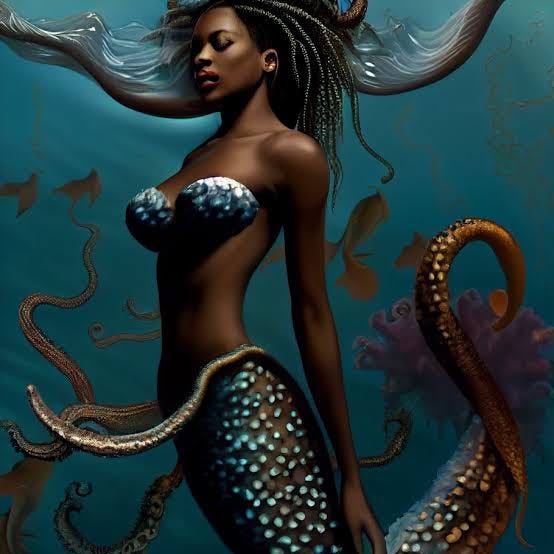
The Middle Passage: When Mermaids Were Born
This is where the story becomes something else entirely. During the transatlantic slave trade’s Middle Passage, several enslaved Africans either threw themselves overboard or were thrown overboard by the enslavers. The reasons were varied—despair, resistance, escape from the unimaginable horror of the slave ship’s hold. But in the aftermath, something profound happened.
I imagine that the survivors, with their different West African cultures and religions, believed that some of these ancestors became mermaids. It makes perfect sense. In West and Central African cosmologies, water was never simply water. It was a boundary, a threshold, a place of transformation. The Kongo people believed in the Kalunga, a watery boundary between the world of the living and the dead, an underwater realm, and a spiritual crossing point. The Yoruba believed that water spirits could take people into the depths and keep them alive, transformed.
When enslaved women and men were cast overboard or when they leapt into the sea rather than endure the horror of the Middle Passage, they did not simply die. They crossed. They transformed. They became water spirits. They became mermaids.
This is not escapist fantasy. This is theology. This is how people make meaning out of the unimaginable. The survivors had lost everything: their freedom, their names, their languages, their land, and their identities, and yet still carried their gods. They still carried their stories. And in those stories, the ancestors who had been lost to the water were not lost at all. They were living on, transformed, protecting their descendants from the deep.
A Wonderful Connection
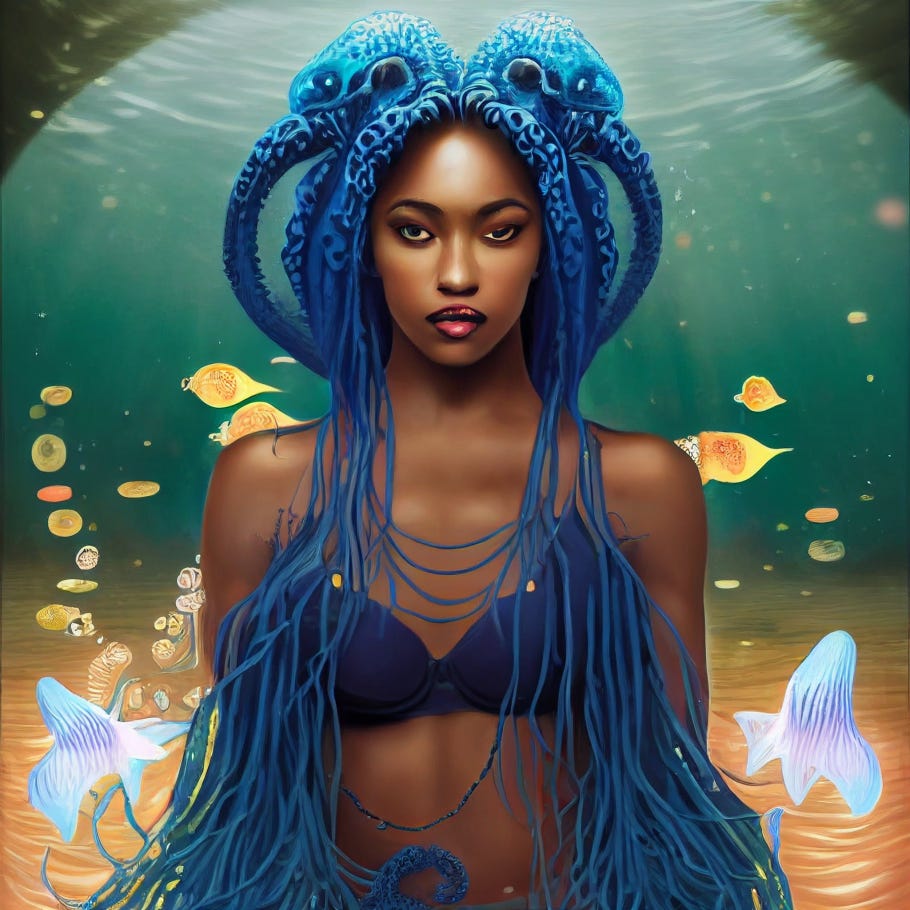
It is actually a wonderful connection. Think about it: the mermaids of the Caribbean are not European imports. They are not pale-skinned maidens longing for love on land. They are Black. They are African. They are the ancestors who refused to be enslaved, who chose the depths instead of the chains.
They are Yemanya, the Ocean Mother, who crossed the Atlantic with her children and never abandoned them. They are Lasirèn, the keeper of knowledge, who grants wisdom and wealth to those who honour her. They are Erzulie, the Ioa of love, whose domain extends beyond romance to encompass the mystery of the sea. They are Lamanté, the gentle mermaid of Martinique, connected to the manatees that glide through Caribbean waters. They are the mermaids and mermen of Trinidad and Tobago, Belize and St Baart who dance in the rivers and lakes, remembered in story and song.
They are also the ancestors: the thousands who jumped, who were thrown, who crossed over into the water and became something else. Something that could not be enslaved. Something that could not be owned. Something that lives on, still, in the waters of the Caribbean, in the stories we tell, in the traditions that refuse to drown.
Emancipation and the Waters of Memory
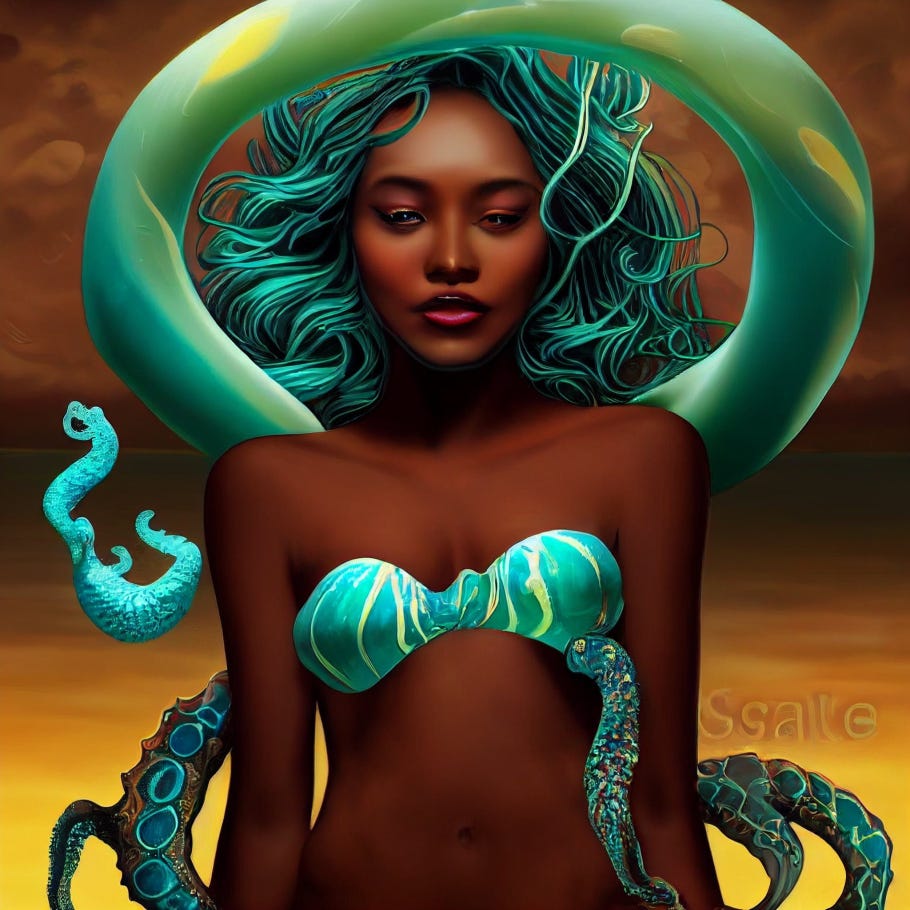
On Emancipation Day, we remember the legal end of chattel slavery in the British colonies on August 1, 1834, and then the full abolition of apprenticeship on August 1, 1838. But the legal abolition was never the end of the story. The spirits who crossed the Atlantic, who survived the Middle Passage, who adapted and transformed and persisted: they are still with us.
In Haiti, drapo flags depicting Lasirèn are used in Vodou ceremonies to this day, connecting worshippers with the underwater realm where ancestors are believed to dwell. In communities across the Caribbean, Yemanya is honoured at the ocean, her blue and white colours adorning altars, her presence invoked through offerings of seashells, fruit, and flowers. In Trinidad and Tobago, the stories of mermaids and mermen continue to circulate in oral culture, passed down through generations.
And today, a new generation is reclaiming these stories and enjoying the seas.
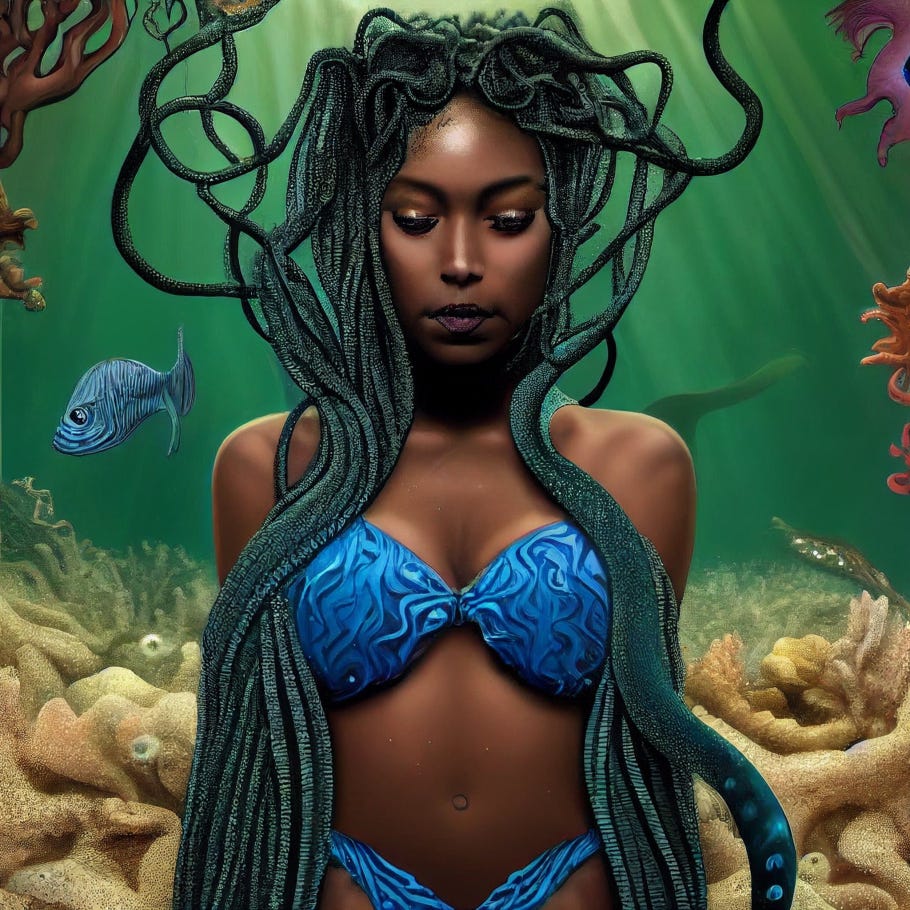
The water belongs to us.
So this Emancipation Day, I want you to think about the mermaids differently. They are not fairy tales. They are not European legends. They are ours: Caribbean, African, and Black. They are the mothers and protectors who crossed the Middle Passage. They are the ancestors who chose the deep. They are the spirits who live in the waters of the Caribbean, in the stories we tell, in the sacred traditions that refuse to drown.
The water belongs to us. It always has. And in the water, our ancestors are still swimming with us and are still protecting us and are still alive.
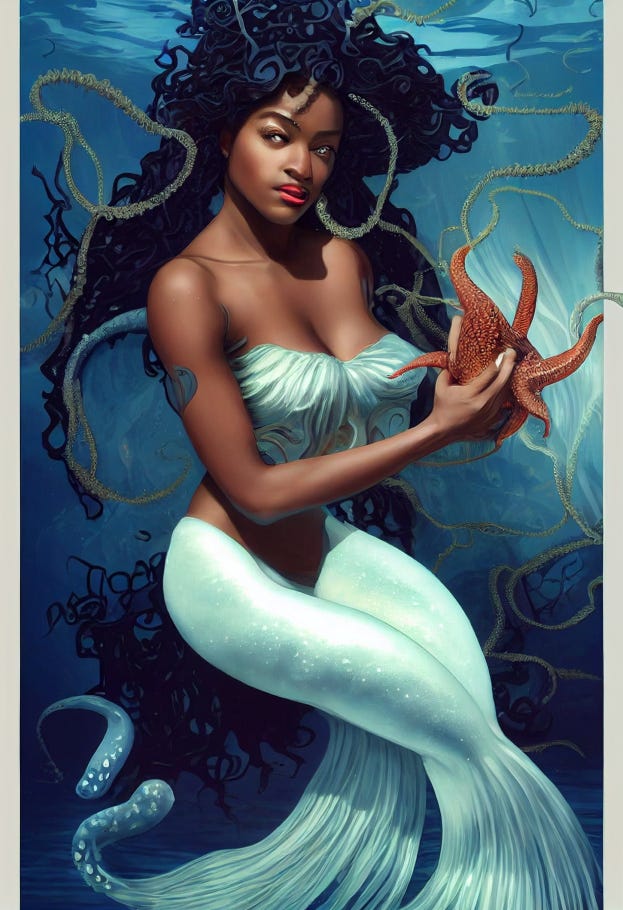
Photo credits come from Murphy, Derek. 246 free Black mermaid fantasy art images. Creativindie. https://www.creativindie.com/blackmermaidart/
Further reading and References
A. de LA Torre, Miguel; La Torre, Miguel A., de (2004). Santería: the beliefs and rituals of a growing religion in America.
Auguste, P. O. (2023, June 20). Yemoja. The Jamet Scholar https://princessonikaauguste.substack.com/p/yemoja
Brown RM. Mermaid Histories and Power. In: African-Atlantic Cultures and the South Carolina Lowcountry. Cambridge Studies on the American South. Cambridge University Press; 2012:251-280.
Finest Resorts. (2026). Manatees: See what the real mermaids of the Caribbean look like! https://www.finestresorts.com/blog/manatees-the-real-mermaids-of-the-caribbean/
French, A. L. D. (2025). Caribbean legends: Myths, folklore & tradition. Lulu Press https://www.lulu.com/shop/a-l-dawn-french/caribbean-legends-myths-folklore-tradition/hardcover/product-rmrgy9g.html?
Fu-Kiau, Kimbwandènde Kia Bunseki (2001). African Cosmology of the Bântu-Kôngo: Tying the Spiritual Knot: Principles of Life & Living
Gaskins, Nettrice R. (2016-01-02). “The African Cosmogram Matrix in Contemporary Art and Culture”. Black Theology. 14 (1): 28–42
Nies, Betst (2014). “Transatlantic Mermaids: Literary and Cultural Fantasies from Copenhagen to Haiti and the United States”. Amaltea. Revista de mitocrítica. 6: 305–327.
Nwokocha, Eziaku A. (2013, September 20). An equilibrist Vodou goddess. Harvard Divinity Bulletin. harvard.edu
Smithsonian Ocean. (2014, March 25). From mermaids to manatees: The myth and the reality. https://ocean.si.edu/ocean-life/marine-mammals/mermaids-manatees-myth-and-reality
TrueNicks. (2022, October 16). Mermaids and the Lusca. Caribbean Authors. https://caribbeanauthors.wordpress.com/2022/10/16/mermaids-and-the-lusca/.