I am an Afro-Caribbean scholar, historian, and body protester rewriting the narratives of women who have been systematically erased, silenced, or mischaracterised. From the hidden subversions in ancient biblical scripture to the powerful archetypes of world myth and the fierce resistance of Caribbean history, this is a space where rigorous academic research meets radical, sex-positive, queer feminist truth.
As a Jamet theologian in heels, I believe in reclaiming bodily autonomy, unearthing buried truths, and busting the myths that keep women small. Step into the archive.
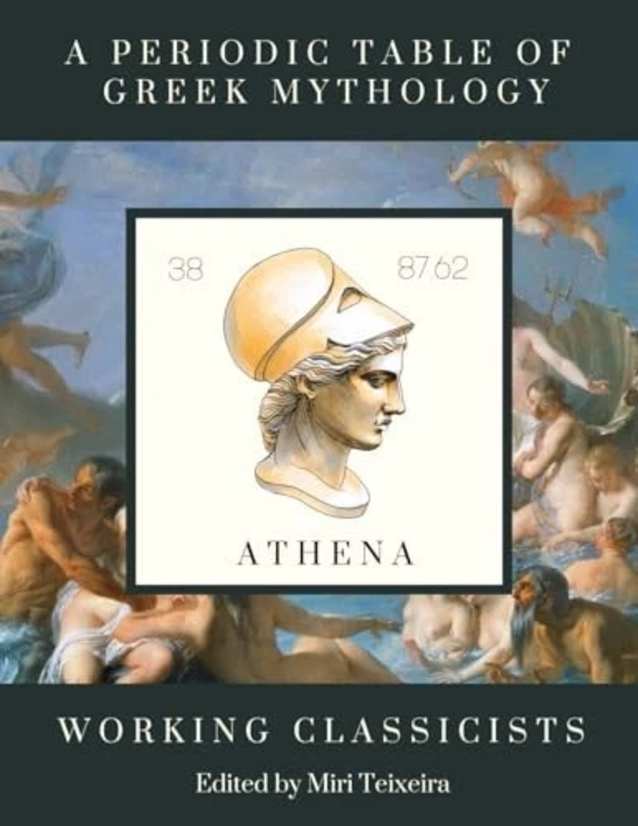
My writing spans multiple platforms, including The Historians Magazine, PopCulture and Theology, Equality Fund, Intersect Antigua, Christian Feminism Today, The Painted Leaf, and The Shiloh Project. I am interested in reclaiming narratives and challenging dominant perspectives, as seen in my micro-essay Reclaiming the Sacred: The Bible, Critical Theory, and Caribbean Identity (published in The Bible and Critical Theory Journal). I contributed an exploration of Tethys for The Periodic Table of Greek Mythology and examined the feminist legacies of Sam Raimi's and Robert Tapert's universes in Women in the Sam Raimi and Robert Tapert Universe: Reflections on/of Feminism in History and Mythology—a chapter featured in Televisual Shared Universes: Expanded and Converged Storyworlds on the Small Screen.
Through my work, I amplified the voices of the overlooked, weaving together history, theology, and pop culture to challenge and inspire.
Welcome to the Jamet Scholar!
History isn’t male—it’s just selectively told.
I am an Afro-Caribbean scholar, historian, and body protester rewriting the narratives of women who have been systematically erased, silenced, or mischaracterised. From the hidden subversions in ancient biblical scripture to the powerful archetypes of world myth and the fierce resistance of Caribbean history, this is a space where rigorous academic research meets...
This book of empirical studies analyzes examples of televisual shared universes since the 1960s to understand how the nature of televised serial narratives and network corporate policies have long created shared storyworlds. While there has been much discussion about shared cinematic universes and comic book universes, the concept has had...
Greek mythology is simply swarming with strange and wonderful characters: mortals, gods, demigods, nymphs and monsters – so many, in fact, that it can be tricky to recall who is who exactly.
A Periodic Table of Greek Mythology offers a one-stop compendium of more than a hundred of these characters.
From A Dark Place is an autobiographical collection of poetry with a lot of darkness; there are constant glimmers of light and hope. The glimmers of light within the darkness illustrate lucidity and resilience. The collection is not overwhelmingly dark but has soft images that demonstrate hope and light. The collection leaves the reader with...
Have you heard of Puduhepa and Sammu-Ramat? If not, you should know that they were two of the most powerful queens in the Ancient Near East. Although they lived centuries apart and belonged to two entirely different civilisations, both of these remarkable women wielded immense power and successfully navigated male-dominated royal hierarchies. In my essay for Historians Magazine, titled "Myths and Monarchs: The Divergent Legacies of Puduhepa and Sammu-Ramat", I compare and contrast their...
There is something deeply uncomfortable about the story of Dinah in Genesis 34, and it is not simply what happens to her.
It is also what happens to her in the way we tell the story.
Genesis tells us that Dinah, the daughter of Jacob and Leah, went out to see the women of the land. Shechem, the son of Hamor the Hivite prince, saw her, took her, and violated her. The language of the passage has traditionally been understood as describing sexual violence or rape.
There is something deeply interesting about the way the Bible tells the story of Solomon's downfall.
Solomon begins as the king everyone wants to remember: wise, wealthy, powerful, internationally connected, and chosen to build the Temple of Yahweh. His reign is presented as a period of extraordinary achievement.
And then, suddenly, the women appear.
“King Solomon loved many foreign women.”
Moabite women. Ammonite women. Edomite women. Sidonian women. Hittite women.
John 4:6–17 has traditionally been read as a story about evangelism. Jesus encounters a Samaritan woman, reveals himself as the giver of living water, exposes her complicated marital history, and eventually becomes known among the Samaritans. In many Christian interpretations, the woman is remembered primarily as a sinner who encounters Jesus and receives salvation. In others, she becomes an exemplary missionary who leaves the well and tells her community about Jesus.